



Every harvest season, small-scale farmers and cooperatives face the same problem: large volumes of grain arrive quickly, but traditional storage methods often fail. Moisture, pests, and temperature fluctuations cause post-harvest losses before the grain even reaches buyers. Affordable grain silo kits are designed to solve exactly these problems. This guide explains what they do, what they are made of, and whether they are the right fit for you.
Storing Grain in Bulk
The core function of a grain silo kit is simple: to store grain safely, in bulk, over the medium to long term. A sealed silo environment creates a stable internal space, isolated from the weather and pests outside. Grain that enters dry and clean remains in that condition throughout the storage period — provided the silo is properly sealed and managed. This is what separates a proper silo from improvised storage: consistency and control, season after season.
Controlling Moisture
Moisture is the leading cause of post-harvest grain loss. When grain absorbs humidity or develops condensation, mold follows. Mold reduces grain to feed grade at best, and produces mycotoxins that make it unfit for human or animal consumption at worst. In poorly managed storage, moisture-related losses alone can reach 5–10% of the total harvest — on a 500-ton operation, that is 25–50 tons lost before the grain ever leaves the farm.
A sealed silo prevents moisture from entering in the first place. Most kits also include a forced-air aeration system: during cooler hours, fans draw ambient air through the grain mass, removing heat and excess moisture before they build to dangerous levels. This keeps grain at safe moisture levels — typically below 14% for cereals and below 13% for soybeans — throughout the storage period.
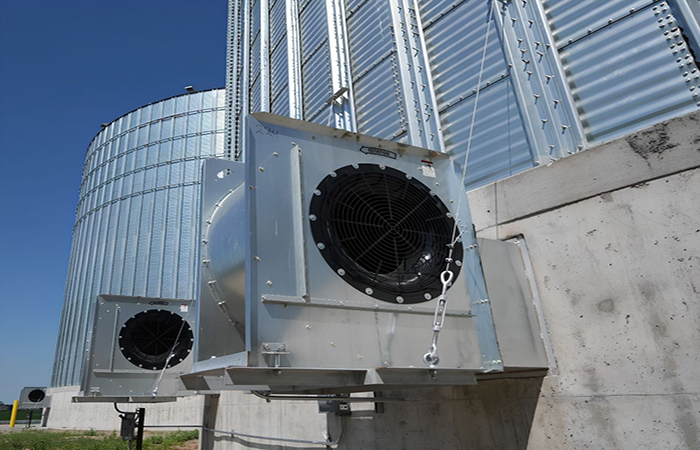 Controlling moisture strategy for grain storage
Managing Pests
Grain weevils, flour beetles, and rodents are relentless in warm climates. In open storage or bags, they have constant access. In a sealed steel silo, entry points are minimized, and the primary threat shifts from infestation to prevention. For operations that need to store grain for extended periods, most kits include a fumigation interface — allowing pest treatment to be carried out inside the sealed silo without emptying and re-handling the grain, which itself causes damage, labor cost, and exposure risk.
Maintaining Temperature
Heat buildup in unventilated storage accelerates grain respiration, degrades protein quality, and reduces germination rates. The damage is often invisible — grain may look fine but lose significant market value by the time it reaches the buyer. A basic aeration system — standard on most kits — circulates air through the grain mass during cooler nighttime or early morning hours, keeping temperatures within a safe range and preventing the hot spots that lead to localized spoilage.
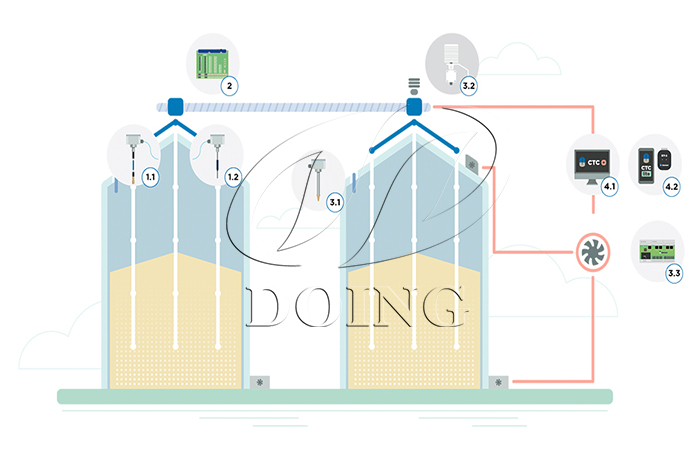 Temperature monitoring system of afford grain silos
The silo body is constructed from hot-dip galvanized steel coils, typically with a zinc coating of 275g/m² or higher. The zinc layer provides long-term corrosion resistance through a self-sacrificing mechanism: even if the surface is scratched, the zinc corrodes preferentially, protecting the underlying steel. This is critical for outdoor installations exposed to rain, humidity, and wide seasonal temperature swings. With basic maintenance, a galvanized steel silo retains structural integrity for 20–25 years or more.
Modular Prefabricated Construction
Rather than custom-built on site, affordable silo kits arrive as pre-punched, pre-drilled, and numbered components. This approach significantly reduces installation complexity. A standard kit can typically be assembled on-site within 2–4 weeks — compared to 3–6 months for poured concrete alternatives. Fewer skilled workers are needed, and no heavy construction equipment is required beyond a basic crane or hoist. This speed and simplicity make silo kits practical for farmers who need storage ready before the next harvest season arrives.
Aeration and Discharge Systems
Standard kits include a basic forced-air aeration system and a gravity-assisted discharge outlet. The aeration system draws ambient air through the grain mass via floor ducts and wall-mounted fans, controlling both temperature and moisture throughout the storage period. The discharge outlet at the base of the silo allows grain to flow out by gravity, reducing the need for mechanical conveying during unloading. Both components are straightforward in design — no specialized training is required to operate or maintain them.
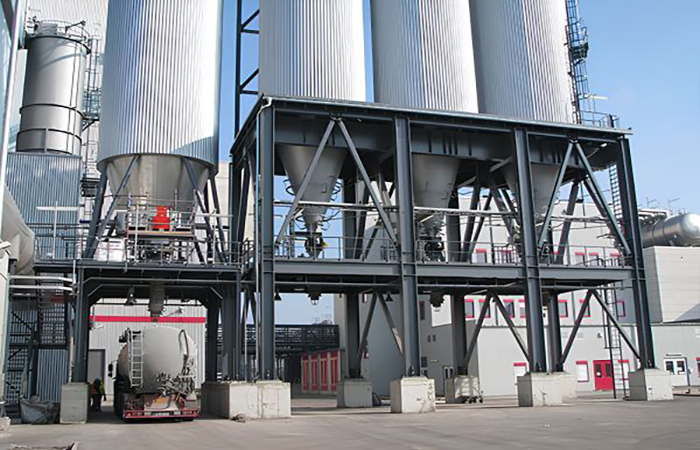 Discharge systems of afford grain silos
Flexible Capacity Range
Individual silo units range from approximately 5 tons to over 1,000 tons per unit, covering a wide range of small-to-medium scale operations. Multiple units can be connected together to expand total storage capacity as the operation grows — without replacing the existing installation. This modularity means the initial investment does not need to cover a permanent maximum capacity; the system can grow alongside the farm or cooperative.
Affordable silo kits are best suited for small-scale operations that need reliable storage without committing to a large capital project.
| Operation Type | Typical Storage Needs | Kit Fit |
| Small-scale farms (50–500 tons) | Seasonal short-to-medium term storage for own use or local sale | Strong fit |
| Agricultural cooperatives | Shared storage for multiple growers, distributed across seasons | Strong fit |
| Grain traders and aggregators | Temporary holding capacity before resale or transport | Strong fit |
| Emerging commercial farms | Operations scaling from bag or warehouse storage to mechanized solutions | Strong fit |
| Large-scale commercial farms (1,000+ tons) | Full-season commercial storage with high throughput requirements | Consider larger system |
| Facilities in extreme seismic zones | Special structural engineering requirements | Engineering review needed |
Affordable grain silo kits address the three most common causes of post-harvest grain loss — moisture, pests, and temperature — through a sealed, ventilated design that is fast to install and built to last. Jinrui Grain Silos manufactures and supplies these kits worldwide, with hot-dip galvanized steel bodies, aeration systems, and installation support included as standard. Contact us for a project-specific quotation.
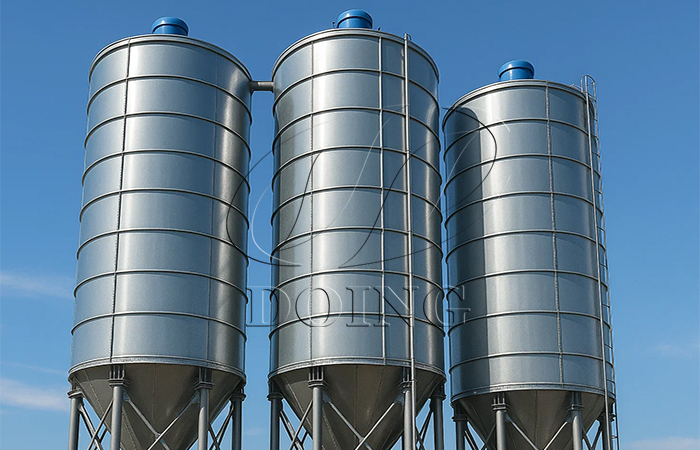 Affordable grain silo kits
Q1: How long does it take to install a grain silo kit?
A: On-site assembly of a standard kit typically takes 2–4 weeks, depending on foundation preparation and system size. Full project delivery — from order confirmation through manufacturing, delivery, installation, and commissioning — usually runs 6–10 weeks. This is significantly faster than poured concrete silos, which can take 3–6 months to complete.
Q2: What grains can be stored in these kits?
A: Standard kits are suitable for wheat, corn, rice, soybeans, barley, sorghum, and most other dry bulk cereals and oilseeds. The critical requirement is that grain is pre-dried to safe moisture levels — typically below 14% for cereals and below 13% for soybeans — before entering the silo. The silo maintains those conditions; it does not replace the drying process.
Q3: Can the system be expanded later?
A: Yes. The modular design allows additional silo units to be connected to the existing system as total storage capacity needs grow. Planning for future expansion during the initial installation — including foundation preparation and connection points — costs little extra and avoids retrofit work later.
Q4: Does the kit include installation support?
A: Jinrui Grain Silos provides detailed assembly documentation, remote technical guidance during installation, and on-site commissioning support. For clients who prefer local installation teams, remote supervision is available. Installation is straightforward enough that most operations with basic mechanical experience can manage it with proper documentation and support.
Q5: What should I look for when choosing a grain silo kit supplier?
A: Three factors matter most. First, steel quality — hot-dip galvanized coils with a minimum of 275g/m² zinc coating for reliable outdoor performance. Second, a proven modular design with documented installation experience in your climate region. Third, clear after-sales support — spare parts availability, technical assistance, and a supplier who answers when you call. Jinrui Grain Silos meets all three.
Share your needs & get a response within 24 hours!