



When planning a new grain storage system, farmers often struggle with a fundamental question: how much capacity is actually needed? Purchasing a grain silo that is too large wastes capital on unused space, while a grain storage system that is too small creates harvest bottlenecks and increases the risk of spoilage. Finding the right grain silo capacity for your farm requires balancing current harvest volumes, future growth plans, and practical site constraints.
In this guide, Henan Jinrui walks you through the key considerations, explains how the capacity of grain silos varies by type, and provides a step-by-step method to calculate the ideal grain silo capacity for your farming operation.
Before determining the right grain silo capacity for your farm, it’s essential to evaluate several fundamental factors that directly influence your storage needs. Understanding the capacity of grain silos starts with a clear assessment of your unique farming operation.
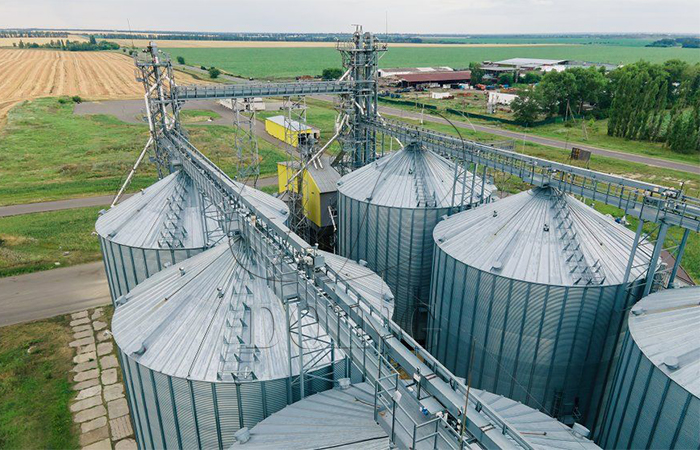 Grain silos for farm
1.Farm Size and Annual Production
The single most important driver of silo capacity is your farm‘s annual grain production. For small farms with limited acreage, a smaller grain silo may be perfectly adequate. For large commercial operations, multi-silo systems are often required to achieve the right silo capacity for your farm.
| Farm Scale | Annual Production | Recommended Capacity Range |
| Small family farm | ≤50 tons | 10–50 tons |
| Medium farm | 50–300 tons | 50–200 tons |
| Large farm / Regional depot | ≥300 tons | 200+ tons per silo or multi-silo system |
2.Grain Types and Density Variations
Not all grains occupy the same volume per ton. Your grain silo storage system must accommodate the specific density of your crops. For example, a silo that holds 5,000 tons of wheat will only hold about 2,500 tons of sunflower seeds, because sunflower seeds have roughly half the density of wheat. This density variation means that if you plan to store multiple grain types, your calculations for the capacity of grain silos must account for the lowest-density crop.
3.Storage Duration and Turnover Frequency
How long do you need to store grain? For short-term storage (three months or less), a capacity slightly below your annual harvest may suffice. For long-term storage (six months or more), you will need additional buffer capacity to account for extended holding periods. Grain intended for seed storage or off-season market timing requires more generous capacity planning to maintain the right grain silo capacity for your farm.
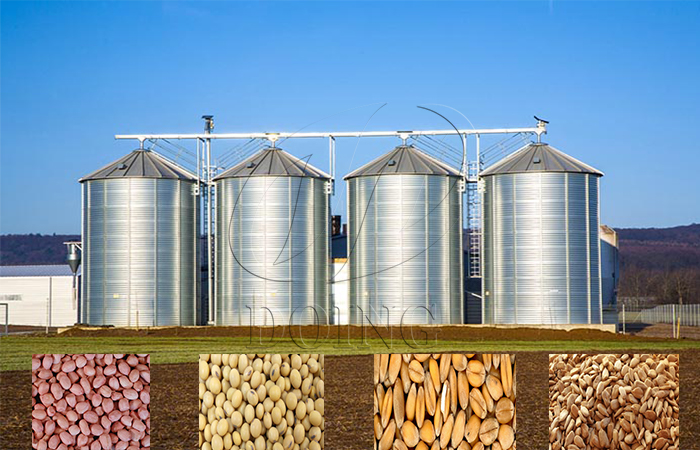 Garin storage solution
4.Future Expansion Plans
If you plan to expand crop acreage or increase livestock numbers within the next five to ten years, your current grain silo capacity should be sized to meet future needs. Steel silos offer modular designs that allow subsequent expansion, but multiple expansions can cost more than selecting the correct capacity of grain silos from the beginning.
5.Site Constraints and Power Availability
Available land area, height restrictions (some areas limit silo height), and on-site power supply all affect grain silo capacity choices. Large-capacity silos typically require three-phase power (380V) for conveyors and ventilation equipment, while smaller silos under 50 tons can operate on single-phase 220V power. A well planned grain silo storage system considers these constraints to deliver the right grain silo capacity for your farm without unexpected costs or delays.
To find the right grain silo capacity for your farm, you need to know how the capacity of grain silos varies by type. For most farms, vertical steel silos are the most practical choice.
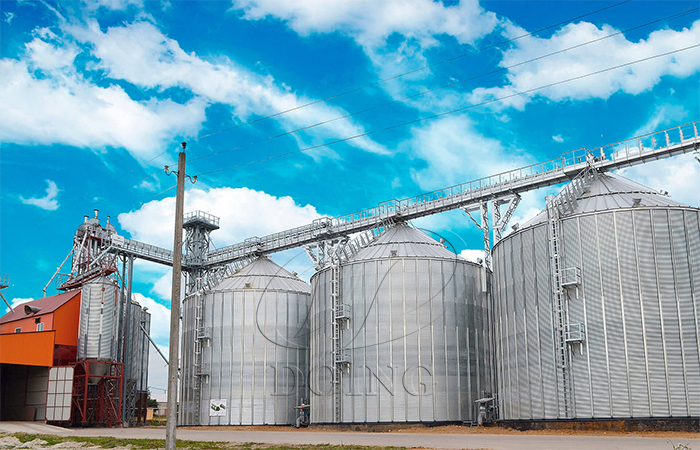 Steel silos for grain storage
Vertical silos store grain vertically, saving space. They come in two common bottom configurations:
Hopper bottom (10–500 tons): Gravity discharge, ideal for frequent unloading.
Flat bottom (100–15,000 tons): Maximum capacity, requires sweep auger for unloading.
Both are part of a complete grain silo storage system, capable of handling wheat, corn, soybeans, and more. Galvanized steel offers the best value for most farms, while stainless steel suits special needs (organic grain, coastal humidity). Concrete silos are durable but less flexible and more expensive.
Selecting the right grain silo capacity for your farm within these ranges helps you avoid wasted space or harvest bottlenecks.
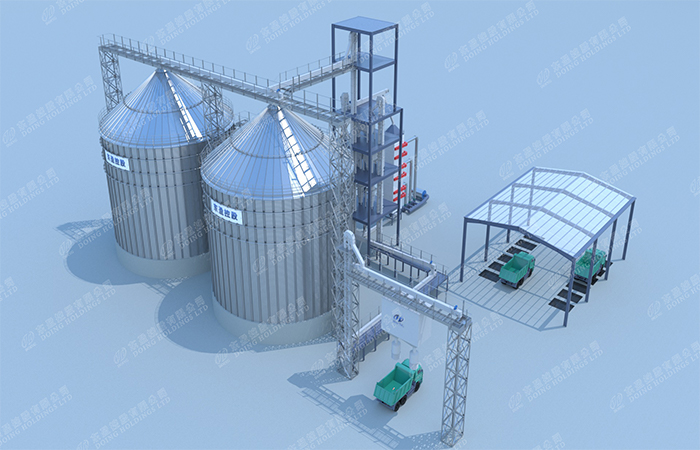 Grain silos capacity
Now that you understand the key factors and silo types, follow this practical framework to calculate the right grain silo capacity for your farm.
Step 1: Calculate Your Average Annual Harvest
Base your capacity decision on actual production data, not guesses. Calculate your average annual harvest over the past three years:
Average Annual Harvest (tons) = (Sum of harvests over the past 3 years) ÷ 3
Example: A farm‘s harvests over three years are 45, 52, and 48 tons. The average annual harvest is (45 + 52 + 48) ÷ 3 = 48.3 tons, rounded to 48 tons.
Step 2: Add Buffer Capacity for Yield Fluctuations
Do not simply choose annual harvest equal to grain silo capacity. Add a 10–15% buffer to account for bumper harvest years and unexpected turnover delays.
Base Capacity (tons) = Average Annual Harvest × (1 + 10–15%)
Example: Using a 15% buffer, base capacity = 48 × 1.15 = 55.2 tons, rounded to 55 tons.
Step 3: Adjust for Storage Duration
Short-term storage (≤3 months): Final capacity = Base capacity.
Long-term storage (≥6 months): Final capacity = Base capacity × 1.1
Example: For long-term grain storage needs, final capacity = 55 × 1.1 = 60.5 tons. A 60–65 ton silo would be sufficient.
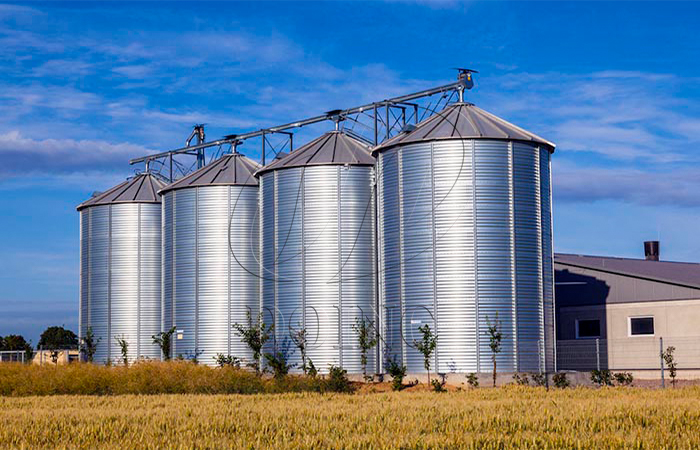 Henan Jinrui grain silos
Step 4: Consider Peak Inventory Requirements
For larger farms, determine your peak inventory (maximum grain on hand in a year). Divide that number by the number of planned silos to estimate the required capacity per grain silo.
Step 5: Match Capacity to Site Constraints
Limited land? Choose taller vertical silos to maximize storage density. Also check local height restrictions (some areas limit silo height to 30 meters or less). Your grain silo storage system should fit comfortably within your available space.
Step 6: Consult with a Professional Manufacturer
Working with an experienced silo manufacturer ensures that the capacity of grain silos is calculated correctly for your specific crop types, harvest schedule, and climate. Henan Jinrui offers expert guidance and custom engineering to help you determine the right grain silo capacity for your farm – whether you need a single grain silo or a multi-silo system.
Choosing the right grain silo capacity for your farm isn’t just about avoiding waste – it’s about protecting your harvest, controlling costs, and ensuring your operation runs smoothly year after year. By following the step-by-step framework in this guide – from calculating your average annual harvest and adding buffer capacity to considering storage duration and site constraints – you can confidently determine the capacity of grain silos that fits your farm‘s unique needs.
Remember that a well designed grain silo storage system should adapt to your grain types, turnover frequency, and future expansion plans. Whether you need a hopper-bottom silo for frequent unloading or a flat-bottom silo for maximum capacity, Henan Jinrui is here to help.
Still not sure how much grain silo capacity your farm needs? Contact Henan Jinrui today. Share your harvest data, crop types, and site conditions – and we will provide a tailored recommendation to help you choose the right grain silo capacity for your farm.
Share your needs & get a response within 24 hours!