



For any agribusiness—whether a large-scale farm, cooperative, or commercial food processing facility—proper grain silo storage is essential for protecting harvests, reducing waste, and ensuring year-round supply stability. From corn and wheat to soybeans and maize, preserving grain quality after harvest directly impacts profitability.
In this article, Henan Jinrui, a professional grain silo supplier, explains the working principles of grain silo systems, their key functional components, and the business benefits they offer—helping you make informed decisions for long-term efficiency.
A grain silo is a large-scale storage structure designed to hold bulk grain. Unlike traditional sheds, silos are engineered to provide protection against moisture, pests, and temperature fluctuations. Modern grain silo systems are typically made of galvanized steel or concrete, with steel becoming the preferred choice due to its corrosion resistance, durability, and cost-effectiveness.
Henan Jinrui specializes in high-quality galvanized steel silos that combine structural reliability with efficient grain storage systems. Our grain silos are designed to support various configurations and deliver long-term performance for agribusiness operations of all scales.
 Henan Jinrui grain silos
When selecting a grain silo for your agribusiness, two common designs stand out: hopper-bottom silos (conical bottom) and flat-bottom silos. Each offers distinct advantages depending on your capacity needs, unloading preferences, and site conditions.
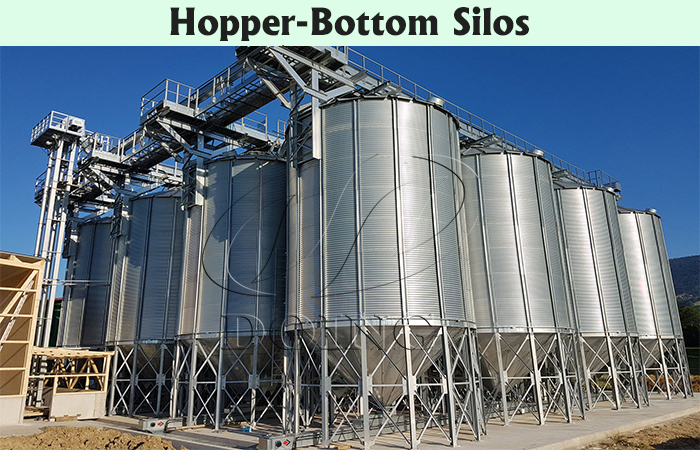
Hopper-Bottom Silos (Conical Bottom)
Hopper-bottom silos feature a sloped, cone-shaped bottom that allows grain to flow downward by gravity. This design simplifies unloading, reduces the need for manual labor, and speeds up grain extraction. Hopper silos are particularly well-suited for operations that require frequent or rapid unloading, such as commercial food processing facilities or feed mills. Their self-cleaning angle also minimizes residue buildup, helping maintain grain quality between batches.
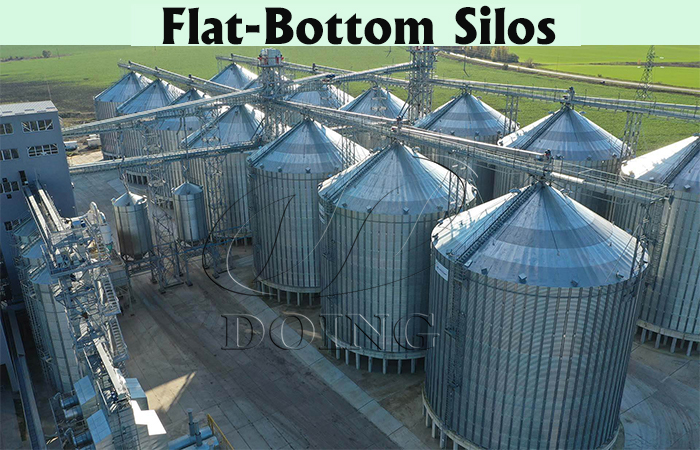
Flat-Bottom Silos
Flat-bottom silos have a level floor and are generally easier and more cost-effective to construct on existing sites. While they require additional equipment such as sweep augers or scraper conveyors for unloading, they offer greater flexibility for storing multiple grain types and are practical for medium- to large-scale agribusinesses. Flat-bottom silos are often the preferred choice for long-term grain storage when paired with proper aeration systems, as they provide a stable, low-maintenance solution for high-volume operations.
Both hopper and flat-bottom silos can be integrated with aeration, temperature monitoring, and automated control systems, ensuring your grain remains safe and profitable throughout the storage period.
 Steel silos for grain storage
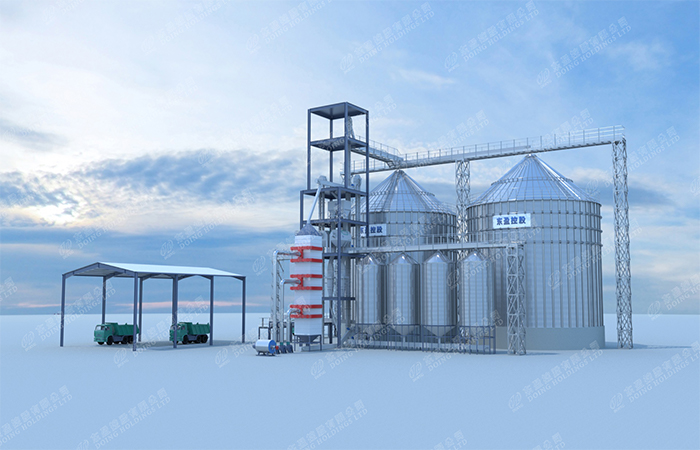
Understanding the working principles of grain silo systems is key to maximizing efficiency and protecting stored grain. Below Henan Jinrui break down each stage of the process.
Filling Process
Grain is delivered to the top of the silo using bucket elevators or belt conveyors. A rotary distributor spreads the grain evenly across the silo, preventing excessive compaction in any single section and maintaining structural balance. Proper distribution within grain storage systems also helps preserve grain quality.
Storage Phase with Aeration
During storage, conditioned air is diffused through the grain mass via aeration ducts. Grain silo aeration systems control temperature and moisture levels, preventing condensation, inhibiting mold growth, and reducing insect infestation. With adequate aeration, grain can be stored for extended periods without quality degradation.
Unloading Mechanisms
When grain is ready for processing or transport, unloading is performed using augers, conveyor belts, or pneumatic systems. Hopper grain silos allow for gravity-assisted flow, while flat-bottom grain storage systems rely on sweep augers to move grain toward central discharge points. These systems ensure smooth extraction, reducing losses and minimizing manual handling.
Monitoring and Management
Modern grain silo systems are equipped with radar level sensors, temperature cables, and PLC panels that log data and automatically activate aeration fans when needed. This allows operators to maintain optimal storage conditions remotely—a critical feature for large agribusinesses managing multiple grain silos.
 Working process of grain silos
Investing in grain silo storage systems offers several compelling advantages that directly impact your bottom line.
1. Space-Efficient Storage
The vertical design of grain silos allows agribusinesses to store large quantities of grain in a compact footprint. This efficiency translates directly into lower facility costs per ton of storage capacity.
2. Reduced Post-Harvest Losses
Proper storage in grain silo systems dramatically reduces losses due to moisture, pests, and spoilage. Well-maintained grain silos preserve both quantity and quality, helping operators avoid costly waste.
3. Strategic Selling Advantage
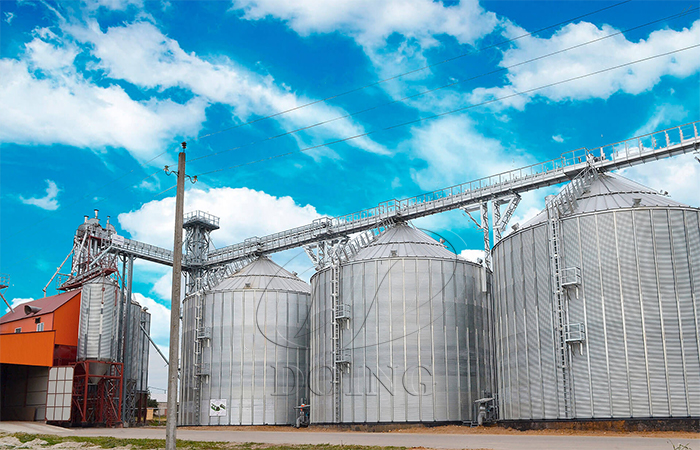
One of the most significant business benefits of owning grain storage systems is the ability to sell when prices are favorable. Operators who can store grain are not forced to sell immediately after harvest when market oversupply drives prices down. Instead, they can hold their product and sell later at higher prices, turning grain silo storage into a profit-enabling asset.
 Grain storage systems
4. Freight and Logistics Savings
On-site grain silos reduce transportation costs by allowing operators to consolidate shipments for better freight rates. This can result in substantial savings, especially for remote agribusinesses.
5. Long-Term Durability
Galvanized steel grain silos offer exceptional durability with relatively low maintenance requirements. Well-maintained units can provide decades of reliable service, protecting your investment in grain storage systems over the long term.
Grain silo storage systems are more than just containers for harvested crops—they are strategic assets that protect your investment, reduce post-harvest losses, and unlock pricing advantages for your agribusiness. From understanding the working principles of grain silos and choosing between hopper-bottom and flat-bottom designs, to implementing proper aeration, monitoring, and unloading mechanisms, every decision impacts your operational efficiency and long-term profitability.
As a professional grain silo supplier, Henan Jinrui offers high-quality galvanized steel silos tailored to the unique needs of farms, cooperatives, and food processing facilities. Whether you require a compact hopper silo for frequent grain turnover or a large flat-bottom silo for extended storage, Henan Jinrui grain silo storage systems are engineered for durability, safety, and ease of use.
Ready to optimize your grain storage strategy? Contact Henan Jinrui today to discuss your capacity requirements, site conditions, and budget. Let us help you build a grain silo solution that delivers reliable performance.
Share your needs & get a response within 24 hours!