



Even after you’ve dried your grain to the right moisture and sealed it inside grain silos, the battle isn’t over. Temperature differences between day and night cause moisture to migrate upward. The top layer gets wet. Mold starts. Insects multiply. Before you know it, thousands of dollars of grain are downgraded or destroyed. You can’t see this happening. But you can prevent it – with a properly designed grain aeration control system.
Unlike fumigation (which kills pests after they arrive), aeration system is a preventive measure. It keeps your grain storage environment stable, cool, and dry – conditions where pests and mold simply cannot thrive.
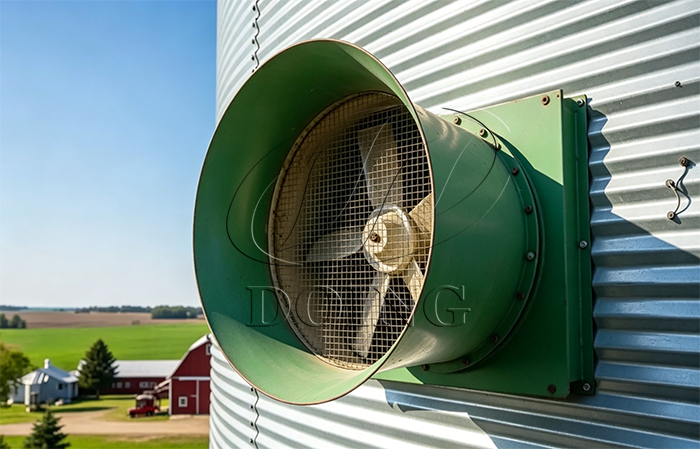 Aeration control system for grain tank
Think of a grain aeration control system as climate control for your grain silo. Sensors inside the grain mass measure temperature. A grain monitoring system continuously compares this data with outside air conditions. When the outside air is cooler and drier than the grain, the aeration control system for grain silos automatically turns on fans to push fresh air through the grain.
This does two things:
Cools the grain – stops moisture migration and hotspot formation.
Removes trapped humidity – prevents mold and keeps the grain fresh.
And when outside air is too warm or humid, the grain aeration control system stays off – saving energy and avoiding the risk of adding moisture.
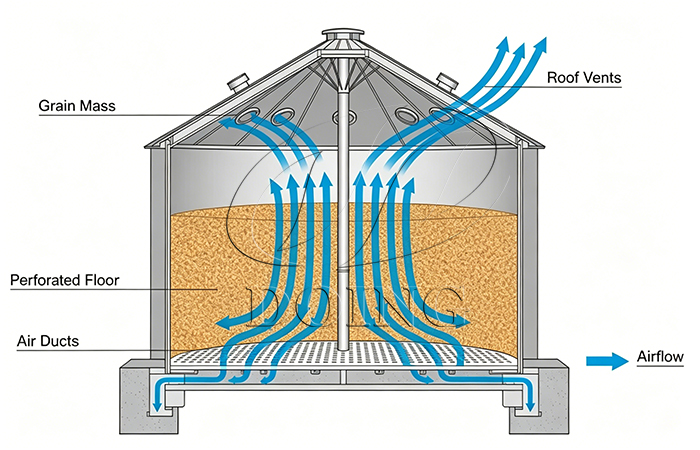 How does the aeration control system work
A grain aeration control system keeps your grain silos cool and dry by pushing outside air through the grain mass – but only when conditions are right. Here is the step-by-step logic programmed into every Henan Jinrui aeration controller.
1. Monitor (Sensing)
Multi-point temperature sensors inside the grain silo report current grain temperature at different depths (e.g., 25°C at the center, 22°C near the wall). An ambient air sensor tracks outside temperature (e.g., 18°C) and relative humidity (e.g., 55%). All data feeds into the grain monitoring system.
2. Compare & Evaluate (Decision)
The PLC control unit compares internal grain conditions with outside air. Using an algorithm, it verifies that the outside air is:
Cooler than the grain – to remove heat.
Dry enough not to add moisture – based on equilibrium moisture content.
Only when both conditions are met does the aeration control system for grain silos activate.
3. Act (Airflow & Distribution)
High‑efficiency fans (axial or centrifugal) provide the right CFM to push a cooling front through the entire grain storage system. Motorized louvers automatically open. A perforated floor or duct network ensures air spreads evenly, eliminating dead zones where moisture could accumulate.
4. Stop (Completion)
Once the grain temperature equalizes to the target setpoint (e.g., 12°C across the silos), fans shut off automatically. Louvers close to prevent unwanted air exchange.
5. Management (Central Control)
A central SCADA interface allows operators to control multiple grain silos from one screen, log aeration cycles, and generate audit trails.
For challenging climates – where outside air is rarely cool or dry (e.g., tropics) – we integrate mechanical cooling (chillers) that dehumidify and cool air before pushing it into the grain silo.
All components are built to withstand dusty, demanding grain handling environments – ensuring long-term reliability and minimal maintenance.
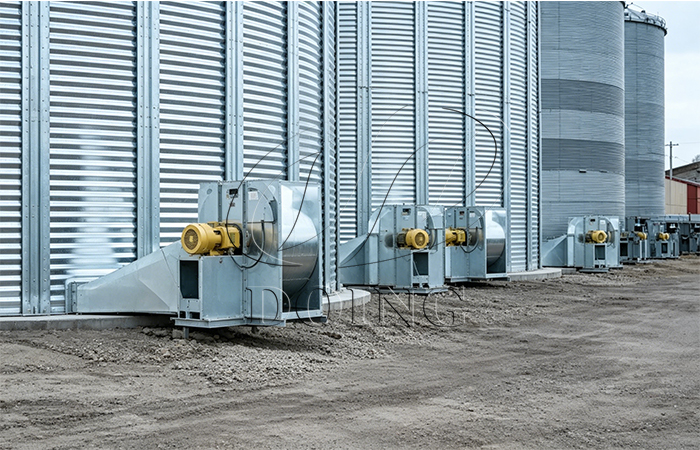 Aeration control system for grain storage monitoring
A grain aeration control system from Henan Jinrui delivers significant benefits for your grain silos and overall grain storage operation:
Energy Savings: The aeration control system for grain silos runs fans only when outside air is cooler and drier than the grain, reducing electricity consumption by 30–50% compared to uncontrolled operation.
Superior Grain Preservation: Precise temperature uniformity (±1°C across the grain silo) stops moisture migration, prevents hotspots, and maintains grain quality for long-term grain storage.
Labor Efficiency: One operator manages an entire grain storage complex from a central SCADA panel, eliminating the need for manual checks across multiple grain silos.
Risk Reduction: Automated control eliminates human error, ensuring that aeration cycles occur only under optimal conditions, protecting your grain from mold, insects, and spoilage.
Data Traceability: The monitoring system logs every aeration cycle, temperature history, and energy usage, providing valuable records for quality assurance and audits.
A grain aeration control system is essential for preserving the quality of grain stored in grain silos. By automatically managing temperature and humidity, it stops moisture migration, prevents mold, and eliminates the conditions where pests thrive. Henan Jinrui designs every aeration control system for grain silos as part of an integrated grain storage solution – working alongside your drying, monitoring, and fumigation systems to deliver complete protection for your grain storage operations.
Contact us today to discuss your grain storage requirements. Whether you operate a single farm grain silo or a large commercial grain storage terminal, Henan Jinrui engineering team can tailor an automated grain aeration solution to your climate, crop mix, and capacity.
Share your needs & get a response within 24 hours!