



You’ve invested in grain silos, carefully managed temperature, and maintained aeration. Yet, hidden deep within the grain mass, pests can still take hold—eating away at your profits and contaminating your product. Temperature control systems manage conditions, but when pests are detected, you need active intervention. This is where a professional grain fumigation system becomes the most critical line of defense for your grain storage solution.
Henan Jinrui well-engineered fumigation system doesn’t just kill visible insects; it eradicates all life stages—eggs, larvae, pupae, and adults—ensuring long-term protection for your grain silo operation.
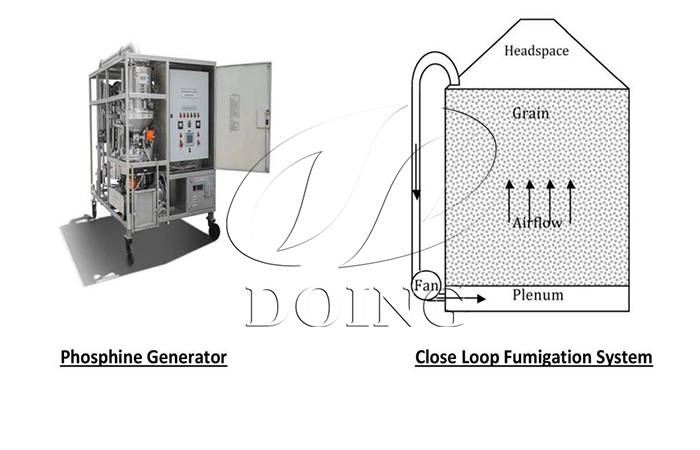 Henan Jinrui grain fumigation system
A modern fumigation system for grain storage safety is an integrated workflow, not just a collection of parts. Below is the standard operating sequence for a fumigation system for grain silos, from preparation to post‑treatment clearance.
1. Preparation & Airtight Sealing (The Foundation)
The grain silo is prepared: the grain surface is leveled, all vents, hatches, and pipe penetrations are sealed. Henan Jinrui ensures the grain silo meets gas‑tight standards (e.g., AS2628) – because without a perfect seal, phosphine escapes, pests survive, and resistance develops. Pressure testing verifies seal integrity before every cycle.
2. Dosing & Recirculation (The Execution)
For grain storage over 150 tonnes, passive gas release is insufficient. Operators introduce the fumigant (typically phosphine) through an external port. A powered recirculation system – using an explosion‑proof fan and internal pipe network – actively distributes the gas to every corner of the grain silo. This eliminates dead spots and achieves a lethal concentration uniformly and rapidly, reducing the risk of under‑dosed grain and resistant pests.
3. Exposure & Monitoring (The Nervous System)
The grain silo remains sealed for the required exposure period (e.g., 7–14 days). A grain monitoring system – a network of fixed gas sensors – continuously measures phosphine levels inside the silo and in the surrounding work area. If a leak is detected or concentration drops below the lethal threshold, immediate visual and audible alarms trigger. This real‑time data confirms that the fumigation system for grain storage safety is performing as designed, without endangering personnel.
4. Aeration & Scrubbing (Environmental Compliance)
After the exposure period, toxic gas cannot be released directly into the atmosphere. Powerful fans ventilate the grain silo, routing the exhaust through a gas scrubber that neutralizes phosphine chemically or physically. This final step ensures your grain storage system meets strict environmental regulations and protects the surrounding community.
5. Safety Clearance
Personnel can only re‑enter the grain silo after sensors confirm that the atmosphere is safe for human occupation.
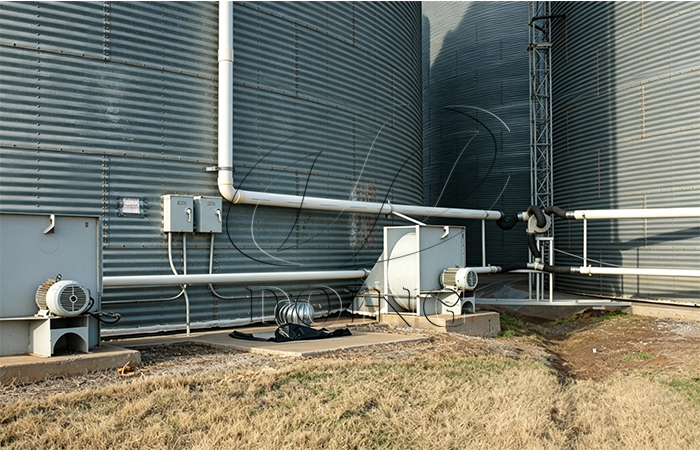 Fumigation system for grain monitoring
The table below shows the required phosphine concentration (ppm) over different exposure periods and temperatures to achieve effective pest control in grain silos. Note that lower temperatures require longer exposure times.
| Pest Category & Examples | Temperature | Exposure Duration (Days) | ||
| 14 Days | 21 Days | 28 Days | ||
| Sensitive Insects (e.g., Maize Weevil, Rice Weevil, Confused Flour Beetle) | >25°C | 200 ppm | 150 ppm | 100 ppm |
| 20–25°C | 250 ppm | 200 ppm | 150 ppm | |
| 15–20°C | – | 250 ppm | 200 ppm | |
| Tolerant Insects (e.g., Lesser Grain Borer, Rice Weevil, Rust-Red Flour Beetle) | >25°C | 300 ppm | 250 ppm | 200 ppm |
| 20–25°C | 350 ppm | 300 ppm | 250 ppm | |
| 15–20°C | – | 350 ppm | 300 ppm | |
A fumigation system is not an isolated unit; it is a critical part of an integrated grain conditioning & monitoring system. It works in tandem with temperature control and aeration systems to manage the grain storage system environment holistically.
These interconnected systems are often managed by a central Electric Control System (PLC), enabling remote monitoring, automated data logging, and coordinated action, which significantly enhances the precision and safety of your grain silos operations.
A well-designed fumigation system is essential for protecting your grain from biological threats. It represents a key investment for any large-scale grain storage facility aiming for professional, modern management standards.
Henan Jinrui not only provides individual components but integrates the fumigation system as part of your complete grain storage solution—from cleaning and drying to storage and conditioning. Our engineering team can design a customized fumigation system tailored to your grain silo capacity, local pest pressures, and operational workflow.
Contact Henan Jinrui today to discuss your grain fumigation requirements and ensure your stored grain remains pest-free and profitable.
Share your needs & get a response within 24 hours!