



Soybeans are high-value and difficult to store — but grain silos give you precise control over every risk factor, from moisture to temperature to handling damage. Here is what that control means for your operation.
For soybeans, moisture is the single most destructive factor. Once moisture content exceeds 13%, the risk of mold and spoilage rises sharply. And the damage is not just about weight loss — it is about grade downgrade. Moldy soybeans drop from human consumption grade to feed grade, a price gap that can reach $50–80 per ton.
Grain silos eliminate this risk through three layers of protection:
● Sealed construction blocks outside moisture from entering the storage environment.
● Aeration systems circulate air evenly through the stored mass, preventing the moisture pockets that form in flat warehouses or bagged storage.
● Real-time moisture monitoring alerts operators before visible mold appears — giving them time to respond while the crop is still salvageable.
The result: soybeans stay dry through the entire storage period, preserving their market grade from day one.
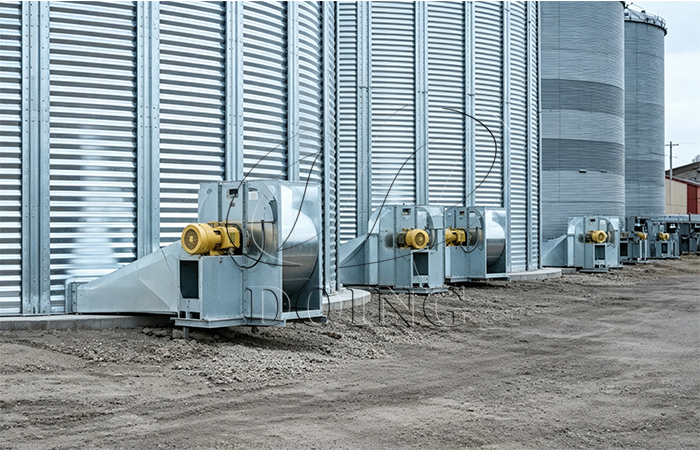 Grain bins aeration system
Moisture is visible. Temperature damage is not — at least not until it is too late.
Soybeans contain roughly 18–20% oil. When stored at elevated temperatures, that oil begins to oxidize. Free fatty acid levels rise, oil extraction rates drop, and the crop’s value erodes silently inside the storage pile.
The threshold for safe long-term storage is approximately 15°C. Above that, quality deterioration accelerates with every degree. Bean temperatures of 25–30°C can cut safe storage life by more than half.
Grain silos give operators the tools to control temperature precisely:
Thermocouple cables placed throughout the silo report temperature data in real time.
When hot spots form, automated aeration systems activate — typically drawing cool night air through the grain mass to bring temperatures back to safe levels.
The vertical silo design makes air distribution uniform, unlike flat storage where airflow is uneven and dead zones are common.
Without temperature control, even dry soybeans lose value over time. With it, quality is preserved for months — even through hot summers.
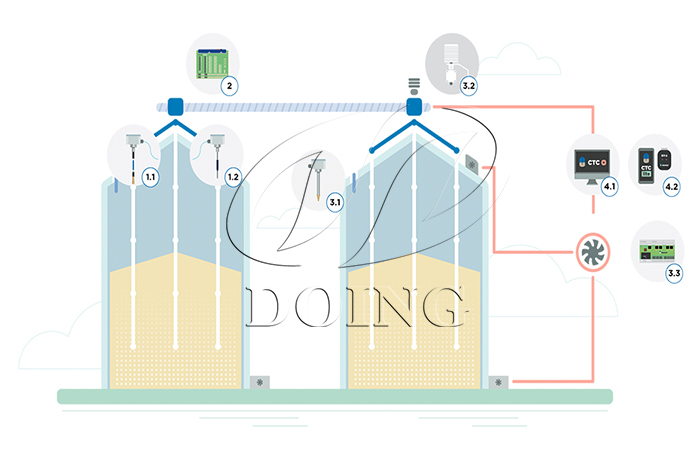 Grain storage temperature control system
Insect infestation and fungal growth can destroy a batch of soybeans faster than almost any other storage hazard. Bean weevils, grain borers, and molds like Aspergillus flavus thrive in warm, humid storage environments. Once established, they spread rapidly — and fungal toxins like aflatoxin are a hard rejection criterion for most international buyers.
Grain silos provide two lines of defense:
First, prevention. The sealed steel structure limits pest entry from outside. Rodents and larger insects cannot chew through steel walls the way they can through grain bags or warehouse siding.
Second, containment. Silos are designed with fumigation-ready ports and gas-tight hatches. If treatment is needed, it can be carried out inside the silo without moving the grain. No need to empty and re-handle — which would create more dust and damage.
For traders targeting export markets where aflatoxin testing is mandatory, this level of control is not optional. It is the difference between passing inspection and losing a shipment.
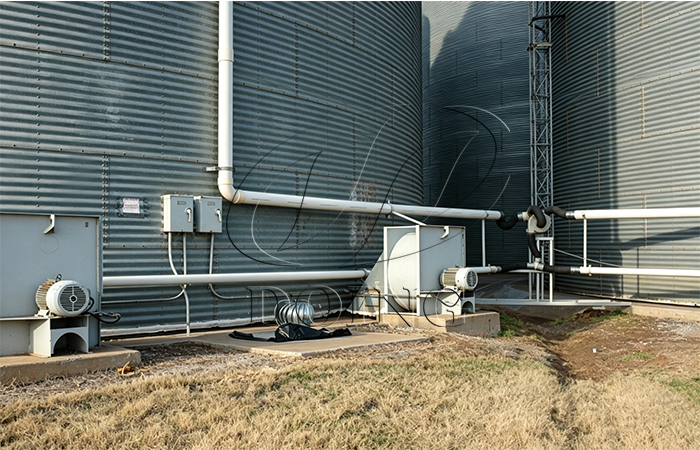 Fumigation systems for grain storage structures
Soybeans have a thin seed coat — significantly more fragile than wheat or corn. Every time they are moved — loaded into a truck, dumped onto a conveyor, transferred between storage spaces — some fraction cracks. Cracked beans break down faster in storage and face strict limits in export contracts.
Many operators focus only on storage conditions and overlook how much damage happens during handling. A soybean batch stored perfectly but moved three or four times can end up with 5–8% broken kernels by the time it reaches the buyer — enough to trigger a price adjustment or rejection.
Grain silos reduce this risk by cutting handling steps:
Gravity-based discharge uses the silo's vertical design to offload soybeans from the bottom, with no mechanical handling required during normal operation.
Direct loading from silo to truck or rail car eliminates intermediate transfers. One conveying step instead of three or four.
Fewer transfers mean fewer cracked beans — and a higher percentage of whole, premium-grade soybeans reaching the buyer.
This is not a feature of the silo. It is a direct economic advantage built into the design.
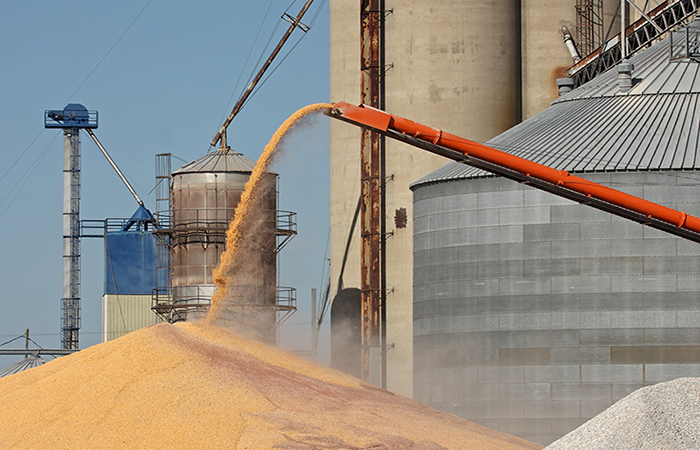 Grain outloading from silos
The final piece of the puzzle is proof. International soybean buyers — especially Chinese, EU, and Southeast Asian importers — increasingly demand documented storage history before they commit to a purchase. They want to know: At what temperature was this batch stored? Was moisture controlled throughout the period? Was fumigation performed, and when?
Without records, even well-stored soybeans are treated as unverified. With records, they command a premium.
Modern grain silo systems make this easy:
Integrated sensors automatically log temperature, aeration cycles, and moisture readings throughout the storage period.
Digital inventory records track each batch by location, entry date, and treatment history.
Export-ready documentation can be generated at the point of sale, providing the traceability that premium buyers expect.
Flat storage and bag systems offer none of this. They may hold soybeans, but they cannot prove how those soybeans were stored. In a market where traceability is becoming standard, that is a competitive disadvantage.
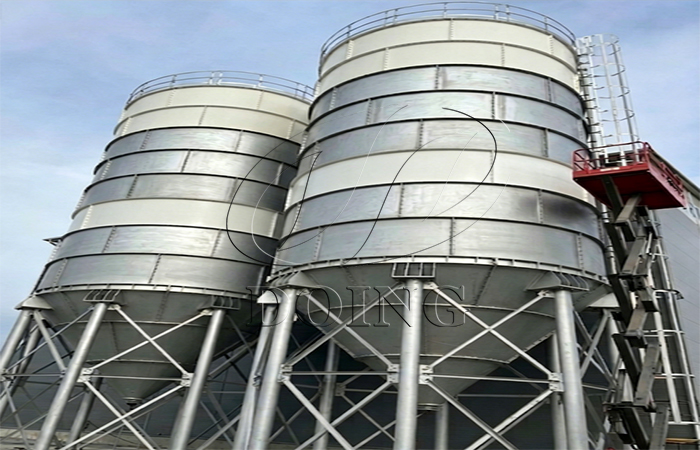 Grain silos for soybean storage
Soybean storage is a chain of risks — moisture, temperature, pests, handling damage, and missing traceability. Break any link, and the crop’s value drops. Grain silos give you control over every link in that chain, from the day soybeans enter storage to the day they leave for market.Jinrui Grain Silos designs and installs soybean storage systems tailored to your climate, capacity, and export requirements. Manufactured with hot-dip galvanized steel (275g/m² zinc coating) and equipped with full aeration and temperature monitoring, Jinrui silos are built for long-term reliability in demanding conditions. Contact us for a custom quote.
Q1: What are the ideal storage conditions for soybeans in a silo?
A: Soybeans should be dried to 13% moisture content or below before entering the silo. For long-term storage, keep temperatures below 15°C using aeration fans — particularly important in warmer climates where heat buildup can silently degrade oil quality over time.
Q2: How much can I save by storing soybeans in silos?
A: The savings are real and measurable. Improper storage causes soybean losses of 5–10%, compared to under 1% in properly managed silo storage. On a 5,000-ton operation, that difference alone represents 200–450 tons of soybeans — worth tens of thousands of dollars at current prices. Add in the premium for lower broken-grain counts and verifiable storage records, and the economics become clear.
Q3: How long does it take to install a soybean silo system?
A: Prefabricated steel silos can typically be installed on-site within 30–60 days. Full project delivery — from site assessment and design through manufacturing, installation, and commissioning — usually takes 60–90 days, depending on site conditions and capacity requirements. This is significantly faster than concrete elevator construction, which can take 6–12 months.
Q4: What should I look for when choosing a soybean silo supplier?
A: Four factors matter most: First, steel quality — hot-dip galvanized coils with 275g/m² zinc coating minimum for corrosion resistance in humid conditions. Second, aeration and temperature monitoring systems sized for soybeans specifically, not generic grain settings. Third, on-site installation support and commissioning — not just delivery to the gate. Fourth, reliable after-sales spare parts and technical support, since storage systems require ongoing maintenance. Jinrui Grain Silos covers all four.
Share your needs & get a response within 24 hours!