



In modern agriculture and industrial storage, grain bins and silos play an essential role in protecting bulk materials and improving storage efficiency. Although many people use these two terms interchangeably, grain bins and silos are actually different in structure and function. Before comparing them, let’s first look at each storage type individually.
Grain bins are storage structures for dry grain – commonly corn, wheat, soybeans, rice, and barley. Their main purpose is to maintain grain quality by controlling temperature and moisture. Typically made of galvanized steel, grain bins are widely used on farms, grain elevators, and processing facilities. Here are three key features.
Ventilation system – Proper aeration prevents mold, insects, and spoilage by regulating internal temperature and moisture. Without it, stored grain deteriorates quickly.
Efficient unloading design – Flat or hopper bottoms simplify grain discharge, reducing labor and speeding up handling.
Optional automation – Grain bins can be equipped with drying systems, temperature monitors, and automated controls for real‑time storage management.
Grain bins are more than containers. They are controlled environments for safe, long‑term grain storage. Now let’s turn to silos, which serve a broader range of materials.
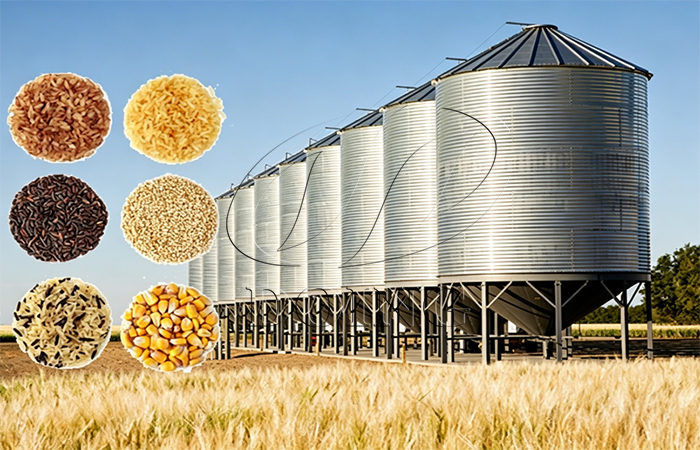 Henan Jinrui grain bins
Silos are storage structures for a wide range of bulk materials. Unlike grain bins, silos are not limited to grain – they can store feed, silage, cement, coal, wood pellets, and many other agricultural or industrial products. Silos are typically taller and narrower than grain bins, and can be made of steel, concrete, or fiberglass. Here are three key characteristics.
Broad material compatibility – Silos handle various materials: silage for livestock feed in agriculture, and bulk materials like cement or coal in industrial sectors.
Tall and narrow design – The height‑to‑diameter ratio of silos is much larger than grain bins, which allows gravity to assist with discharge and saves floor space.
Advanced internal systems – Depending on the material stored, silos can be equipped with discharge systems, weighing systems, and automatic monitoring equipment to improve operational efficiency.
Silos are versatile storage solutions – from farm silage to industrial bulk materials – designed for efficiency and scalability.
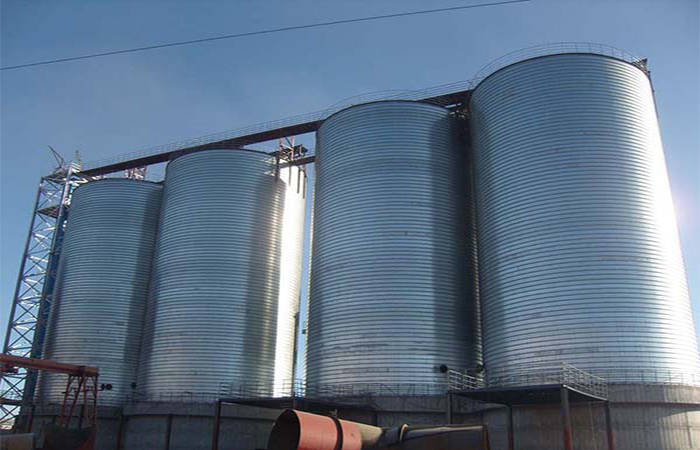 Steel silos
Now let’s directly compare them. Grain bins and silos differ in two main aspects: structural design and function. Understanding these differences helps you choose the right equipment for your needs.
Structural design – Grain bins are generally wider with lower sidewalls, making them ideal for dry grain storage and easy aeration. Their design allows air to circulate effectively through the stored grain, helping maintain product quality. Silos, on the other hand, are typically taller and designed for vertical storage. This structure maximizes storage capacity while minimizing ground space usage. Industrial silos, in particular, are built for high-volume storage and continuous material handling.
Function – Grain bins are designed specifically for grain storage. Their main function is to keep corn, wheat, soybeans, and rice dry and safe for weeks or months, focusing on aeration and moisture control. Silos, on the other hand, are designed for a wider range of bulk materials. They can store grain, but also feed, silage, cement, wood pellets, and industrial powders. Their function is material versatility and high-volume storage.
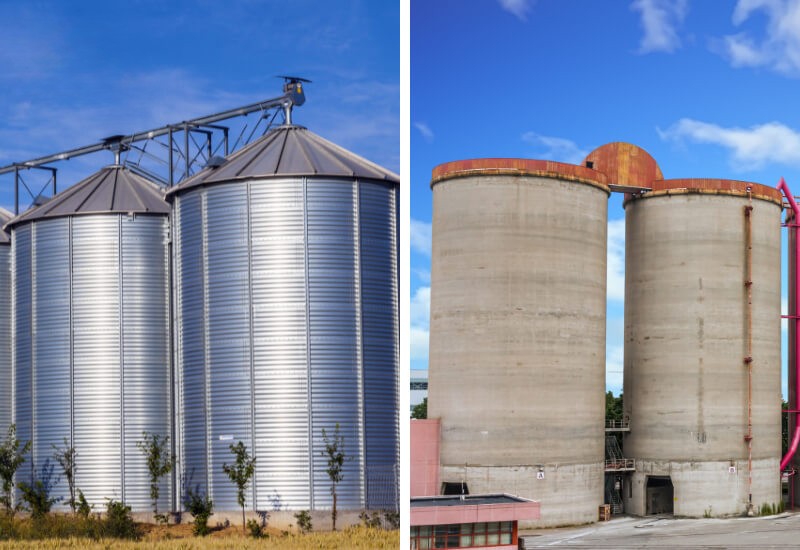 Grain bins and silos
So, choosing between grain bins and silos depends on several factors, including material type, storage capacity, budget, and operational needs. For farmers and grain processors, grain bins are often the best choice because they provide excellent grain protection and efficient aeration systems. For industrial applications or businesses handling different bulk materials, silos offer greater flexibility and larger storage capacity. When planning storage projects, companies should also consider future expansion, automation requirements, and long‑term maintenance costs.
If you have any needs, please feel free to contact Henan Jinrui. Tell us your required capacity, local climate conditions, and budget, and we will tailor the best storage solution for you based on your requirements.
Share your needs & get a response within 24 hours!