



Proper grain storage is essential for farms, grain processing plants, and agricultural businesses to preserve quality and prevent losses. Using grain storage silos correctly can keep your harvest safe for one to three years or even longer. According to the UN Food and Agriculture Organization (FAO), global grain losses reach 8% annually – 3% from mold and 5% from pests. Proper storage practices can significantly reduce these losses.
Below, Jinrui Grain Silos walks you through the key steps, from pre-storage preparation to daily management and final grain outgoing, so you can maximize the performance of your steel silos and minimize post-harvest losses.
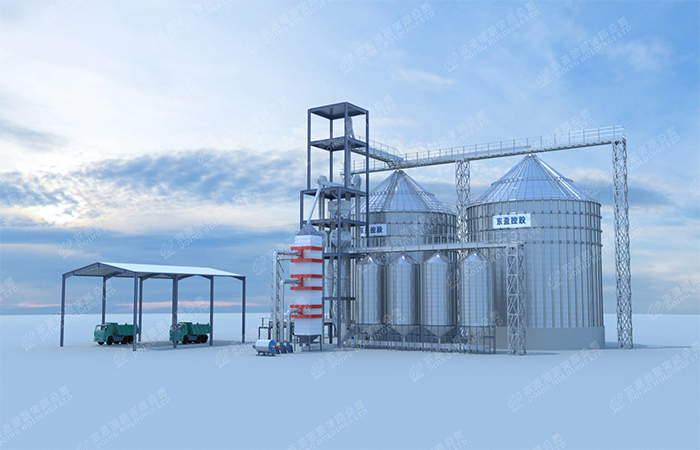 Grain cleaning and drying system
Long-term storage success begins before the grain enters your silo.
Start by cleaning the silo itself – remove any leftover grain, dust, or mold from inside and around it. Then turn your attention to the harvested grain. Running it through a grain cleaning machine (like a vibrating screen or air-screen cleaner) helps remove impurities, broken kernels, and chaff. Clean grain stores better and allows air to flow freely during ventilation.
Next, check the moisture level. If the grain is too wet, you will need to dry it before putting it into the silo:
| Grain Type | Safe Moisture for Long-term Storage | Action if Above |
| Corn, wheat, rice | ≤ 13% | Dry before storage |
| Sorghum, beans | ≤ 12% | Dry before storage |
| Soybeans | ≤ 11–12% | Dry before storage |
A grain dryer – whether a continuous flow type for large volumes or a batch dryer for smaller farms – can bring moisture down to the safe zone within2–6 hoursper batch.
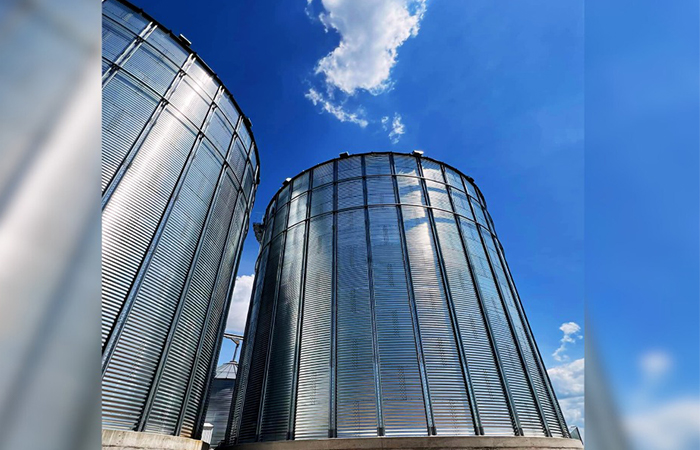 Temperature control system for grain silos
Once the grain is inside your silo, the most important ongoing tasks are ventilation and temperature monitoring.
Ventilation guidelines:
Run mechanical ventilation systemsevery 3–5 daysunder normal conditions;dailyduring hot seasons
Only ventilate when outdoor temperature and humidity are lower than inside the silo
Stop ventilation on rainy, foggy, or very hot and humid days – pushing moisture back into the grain causes more harm
Temperature monitoring:
Install temperature sensors at1.5–2 meter intervalsvertically inside the silo
Check readings every3–5 daysunder normal conditions;dailyduring summer
If one spot suddenly becomes2°C or morewarmer than surrounding areas, that is a warning sign of heating or pest activity – act immediately
Keep overall grain temperature stable; avoid large temperature differences between layers
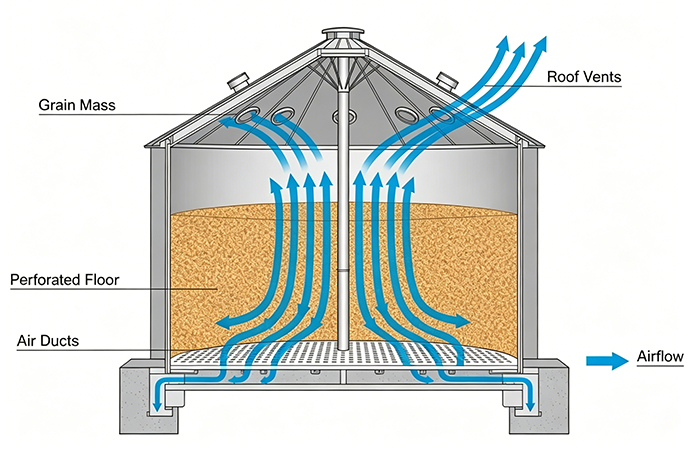 Grain aeration system
Pests and mold together account for the 8% annual global grain loss reported by the FAO – making prevention a top priority.
Physical barriers:
Keep the area around your silo dry and tidy
Install mesh screens at all inlets and outlets to block insects and rodents
Chemical control (when necessary):
Choose low-toxicity insecticides made specifically for stored grain
Always follow national safety standards – never use prohibited pesticides
Mold detection:
Check regularly for odd smells, discolored grain, or caking
If you spot mold anywhere in the silo, isolate and remove the affected grain immediately before it spreads
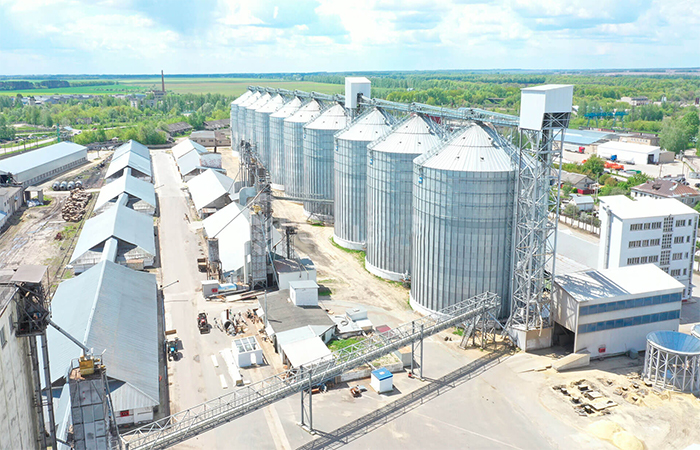 Jinrui grain silos
Routine checks keep small problems from becoming big ones.
Silo exterior inspection:
Walk around your silo regularly to look for water leaks, wall deformation, or damaged door seals
Repair any issues promptly to prevent moisture ingress
Grain circulation:
For grain stored longer than6 months, consider turning or circulating the grainevery 2–3 months
This improves internal air circulation and prevents local compaction and deterioration
Equipment upkeep:
Keep ventilation fans, temperature sensors, and conveying machinery in good working order
A broken fan can lead to a hot spot that ruins an entire batch of grain
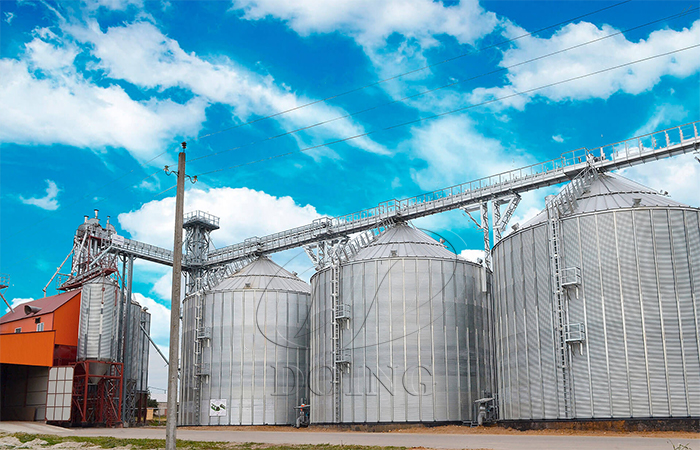 Jinrui grain silos for grain storage
When it is time to remove grain from storage, follow two simple rules:
1.First in, first out– This prevents old grain from being left behind for too long
2.Re-inspect before unloading– Check grain quality again; if you find any deterioration, separate that portion and handle it separately from the good grain
How long can grain be stored in a silo?
With proper moisture control, ventilation, and pest prevention, most grains can be safely stored for 1–3 years in a well-maintained steel silo. Wheat and corn tend to store longer than soybeans, which are more sensitive to moisture and temperature fluctuations.
What moisture level is safe for long-term grain storage?
Target moisture varies by grain type: corn, wheat, and rice 13% or below; sorghum and beans at 12% or below; soybeans at 11–12%. Anything above these thresholds requires drying before storage.
How often should I ventilate a grain silo?
Under normal conditions, ventilateevery 3–5 days. During hot or humid seasons, increase frequency todaily. Always ventilate only when outside conditions are cooler and drier than inside the silo.
What temperature difference signals a problem inside the silo?
A localized temperature rise of 2°C or moreabove surrounding grain indicates potential heating, mold growth, or pest activity. Investigate immediately and take corrective action.
How often should grain be turned or circulated during long-term storage?
For grain stored longer than 6 months, turning or circulating every 2–3 monthshelps prevent compaction, improves airflow, and reduces the risk of localized spoilage.
Properly using silos for long-term grain storage takes discipline, but the payoff is worth it. From cleaning and drying to ventilation, pest control, inspections, and grain rotation – each step helps cut losses and keeps your harvest safe for one to three years or longer.
Jinrui Grain Silos has 15+ years of experiencemanufacturing steel silos and providing long-term grain storage solutions for clients in 50+ countries. Looking for durable silos and professional guidance? Contact us today for a free consultation and custom quote – let’s protect your grain together.
Share your needs & get a response within 24 hours!